
LVDT displacement sensors: what they are
LVDT (Linear Variable Differential Transformer) displacement sensors are electromechanical transducers used for linear position measurement. They convert mechanical displacement into a proportional electrical signal.
Uses
They are used to measure displacement, deformation, position and stroke variations with high accuracy over relatively short distances, including in industrial applications and continuous monitoring systems.
Operating principle
The operating principle is based on electromagnetic induction: a primary coil is powered by alternating current, while two symmetrically arranged secondary coils generate a differential signal that varies according to the position of the moving core.
Construction
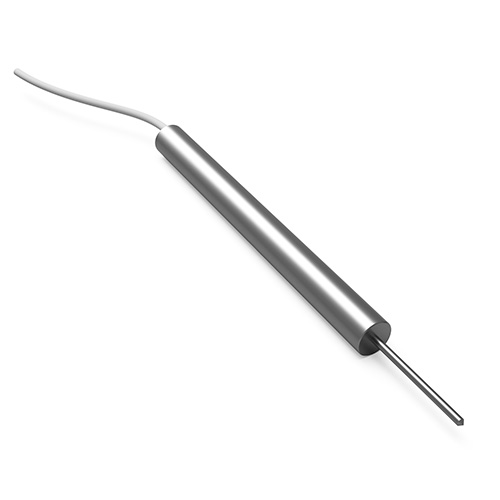
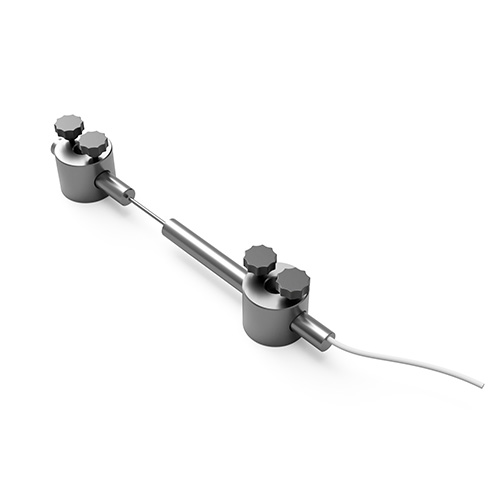
An LVDT consists of a cylindrical body containing the electrical windings and a movable ferromagnetic core connected to the element being measured. When the object moves linearly, the core changes the magnetic coupling between the coils, producing an output proportional to the displacement.
Benefits
Because there is no direct mechanical contact between the core and the windings, these sensors offer high reliability, low wear, good repeatability and a long service life, making them suitable even for harsh environments or applications subject to vibration.