
Multi-point borehole extensometer: purpose
The multi-point borehole extensometer is an instrument designed to measure displacement and deformation along the axis of a borehole, enabling distributed monitoring of movements in soil, rock, or structures.
How it works
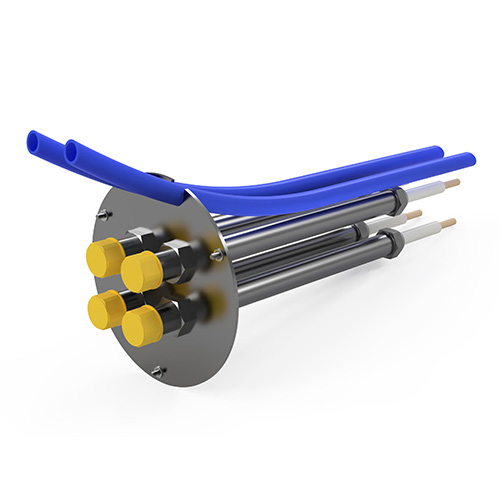
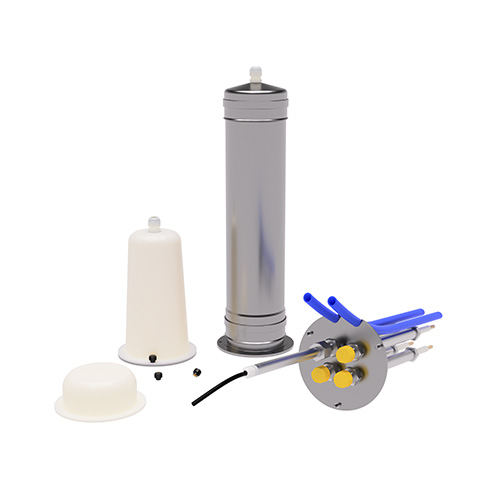
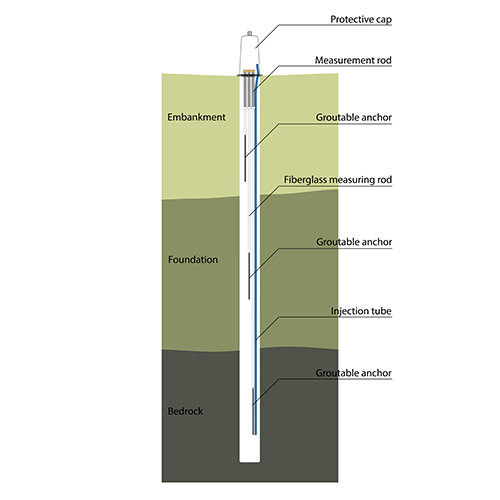
The instrument consists of a reference head installed at the borehole collar and a series of anchors positioned at known depths. These are connected to the head by rigid rods, made of stainless steel, or flexible rods, made of fiberglass, housed inside protective sheaths to ensure free movement.
Variations in the distance between the anchors and the reference head allow accurate determination of the magnitude, distribution, and evolution over time of deformations along the monitored profile.
Variations in distance between the anchors and the reference head allow accurate determination of the magnitude, distribution, and time evolution of deformations along the monitored profile.
Configurations
The instrument can be manufactured with multiple measuring points, allowing detailed analysis of soil or structural behavior at depth. It is available in both manual and automated versions, with electrical transducers and data acquisition systems.