
Hydraulic settlement gauges: purpose
Hydraulic settlement gauges are designed for continuous, high-precision monitoring of differential settlements and vertical displacements in geotechnical and structural works.
How it works
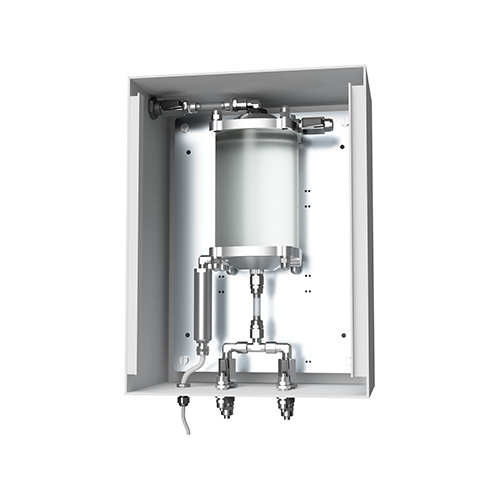
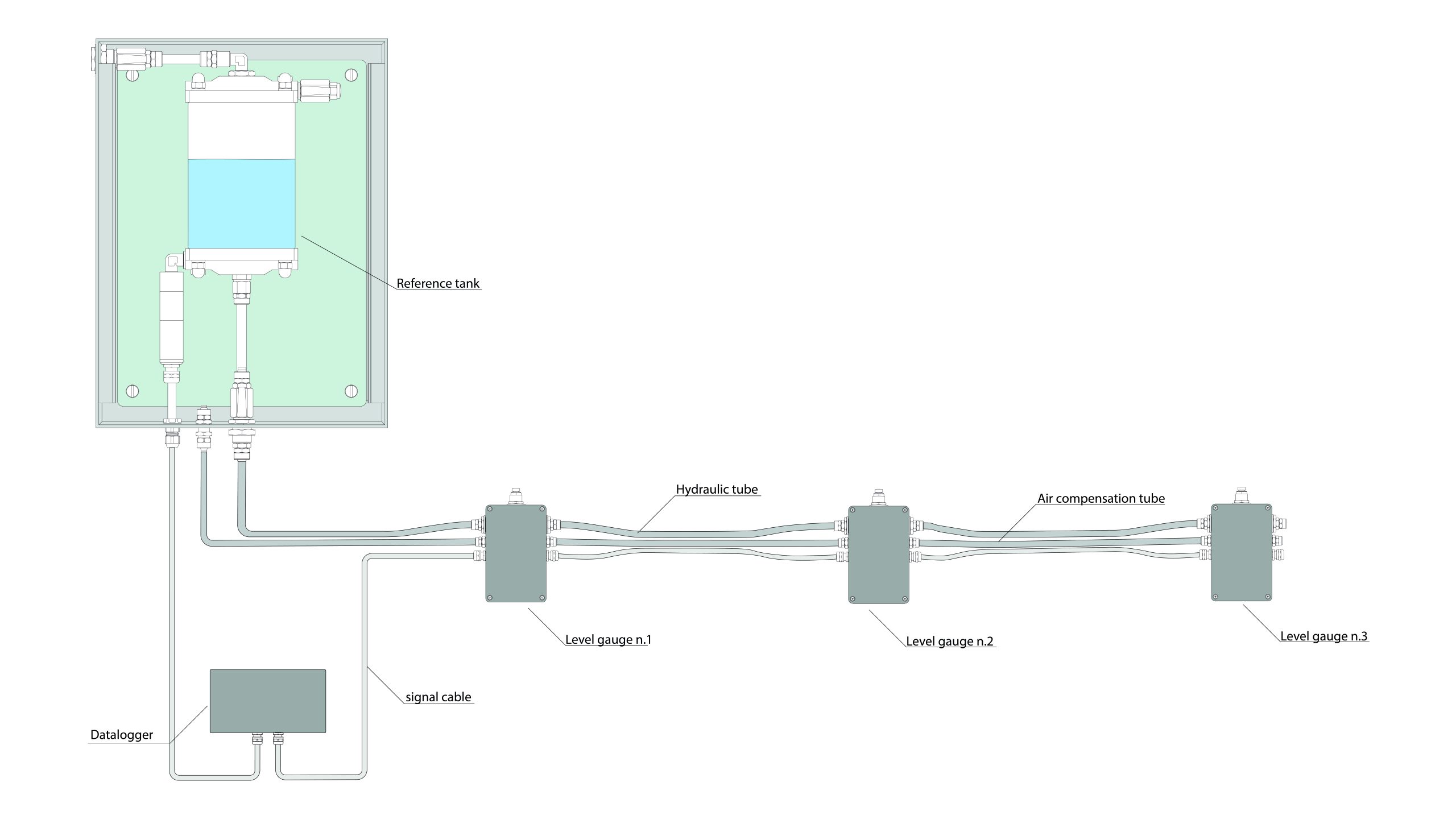
The system measures settlements at multiple locations by means of one or more networks of pressure sensors hydraulically connected to a reference reservoir positioned in a stable area. By accurately determining differential elevations between monitoring points, the instrument provides reliable data for assessing soil-structure interaction and tracking structural performance throughout all phases of operation.
The technology, based on high-resolution pressure transducers, ensures reliable measurements over long periods and under different environmental conditions. It is particularly suitable for automated monitoring, with full integration into data acquisition and remote monitoring systems.
Closed hydraulic circuit
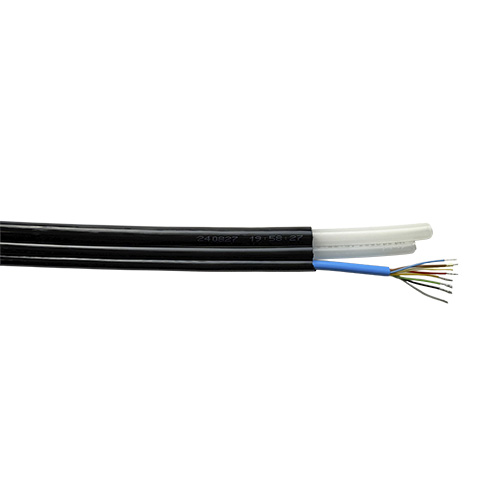
In the closed hydraulic circuit, any change in elevation at a monitoring point generates a corresponding variation in fluid pressure, which is detected by the pressure sensors. This operating principle allows for highly precise and responsive settlement measurements. Compensation lines are incorporated to mitigate the effects of barometric pressure and temperature variations, thereby improving the accuracy, consistency, and long-term stability of the monitoring system.
System composition
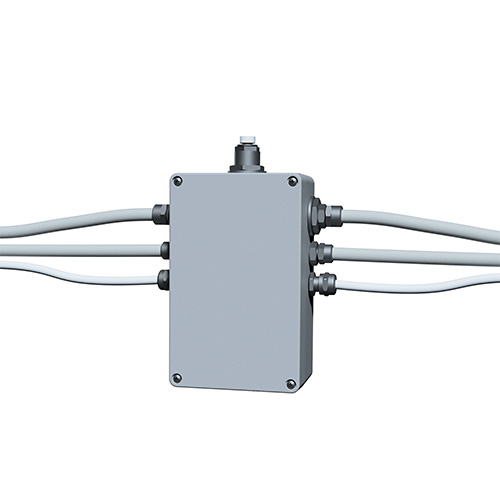
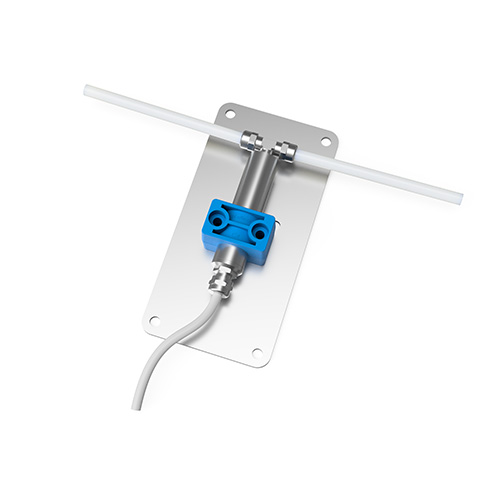
The GESTECNO hydraulic settlement monitoring system consists of a reference reservoir, a series of measuring cells (“cups”) installed at selected locations along the structure, hydraulic tubing, and electrical connections. The instrument is designed for easy installation, long-term reliability, and a flexible layout that can be tailored to specific project requirements.
Its structural robustness and modular design make it suitable for demanding environments, ensuring high performance even under complex operating conditions.
High-accuracy versions
The device is also available in high-accuracy versions (ASI-307 and ASI-317), with each internal sensor tested in a climatic chamber and individually calibrated to compensate for thermal effects over a wide temperature range.